
Wax Pattern Production: The Foundation of Investment Casting
The investment casting process (lost wax method) begins with the production of a wax pattern. Although the wax is not part of the final product, its quality significantly determines the properties of the resulting casting. It is a controlled technological process with precisely defined parameters such as temperature, pressure, and material behavior during solidification.
How Wax Patterns Are Produced
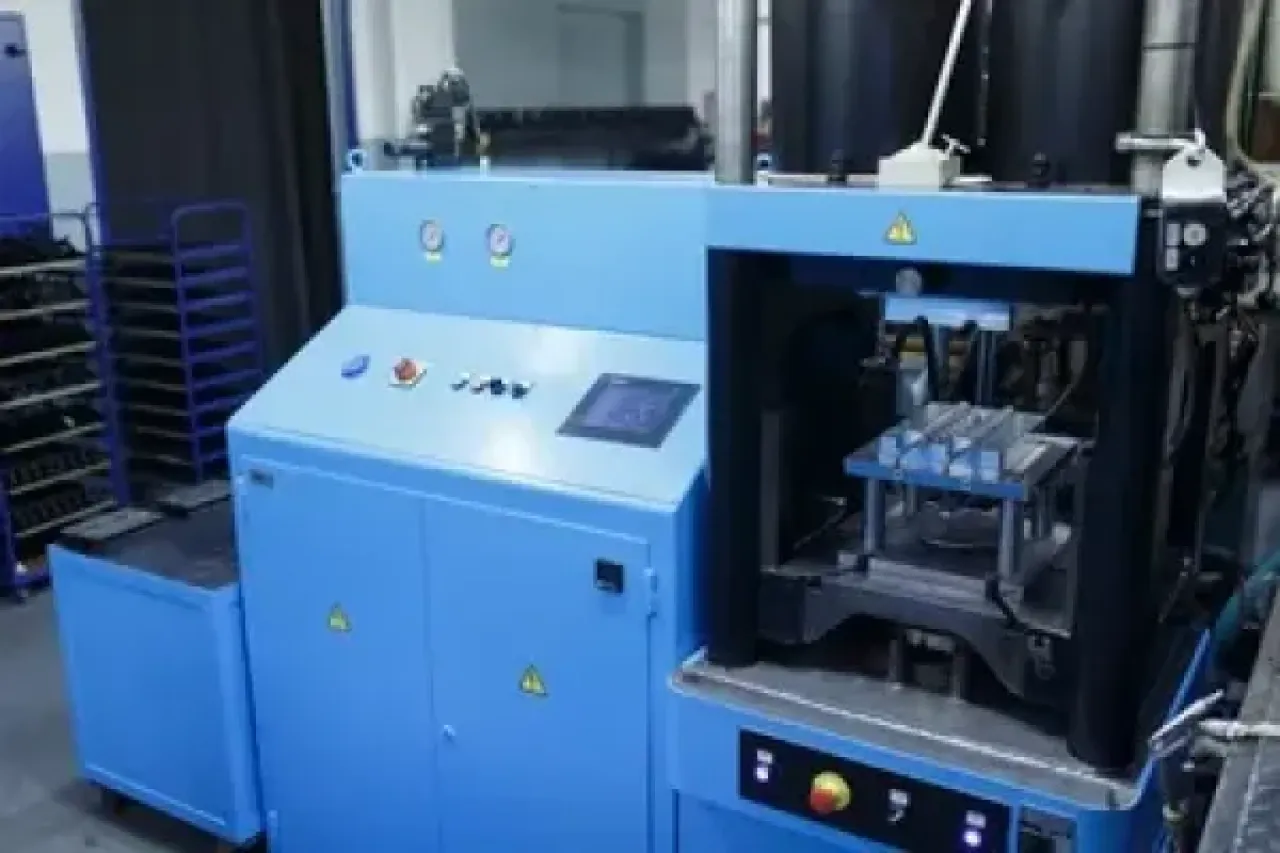
Wax patterns are made by injecting wax into precision metal molds. The result is a geometrically accurate replica of the final casting.
1. Wax preparation
A special wax mixture is used with defined viscosity, processing temperature, and controlled shrinkage. Proper parameter settings are crucial for flawless mold filling.
2. Wax injection
Molten wax is injected under pressure into metal molds (typically aluminum/dural). Pressure and temperature control ensure complete cavity filling and eliminate air pockets.
3. Cooling and stabilization
After injection, controlled cooling takes place. Internal stresses and deformations must be minimized to ensure dimensional stability.
4. Removal and inspection
Once solidified, the pattern is removed and inspected visually and dimensionally. Minor defects are corrected.
5. Assembly of wax trees
Individual patterns are assembled into “wax trees,” allowing efficient batch production and optimizing the casting process.
Why This Step Is Crucial
The wax pattern is an exact replica of the final casting. All details, surface quality, and dimensions are transferred into the ceramic mold and then into metal.
Errors at this stage are difficult to correct later, which is why this phase strongly affects:
- dimensional accuracy
- surface quality
- detail reproduction
- overall process stability
In the broader context of the entire precision casting process, this phase is closely linked to other technological steps, such as the selection of a suitable material. You can find more information on this in the article “What Alloys Do We Use and Why Material Selection Matters,” which discusses the impact of material on the final properties of the casting.
It is equally important to properly prepare the input data for production. The article “How to Prepare the Basis for Casting Production” focuses on this, explaining how to design a model so that it is manufacturable and technologically sound.
Summary
Wax pattern production is not just a preparatory step but a critical technological phase in investment casting. Proper parameter setup and strict quality control determine the final product quality.
Need precision castings tailored to your needs? Contact us and we will prepare a technological solution according to your requirements.
Contact